Sunday, April 25, 2010

The Flavor Bible: More Delicious than the Actual Bible!

Imagine this: you have a fridge and pantry full of food, a garden full of herbs, a rumbling stomach, and no idea what to make for dinner.  You rummage through your potential ingredients, racking your brain for something to cook, but inspiration doesn't strike.  Enter The Flavor Bible.  A quick flip through the book, and with some basic cooking techniques, a beautiful, harmonious dinner is just a few minutes away.
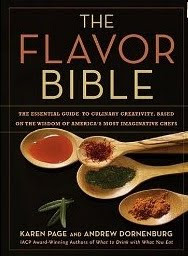

Unlike most cook books, The Flavor Bible doesn't actually include any recipes.  Rather, it consists of an alphabetized list of ingredients, followed by other ingredients that match well with the main ingredient.  The lists are based on feedback from hundreds of professional chefs, and the resulting answers are displayed based on the number of people who voiced the same opinion.

For example, if you look up hazelnuts, you'll find that CHOCOLATE and VANILLA are the most-referenced good pairings (as indicated by the uppercase letters).  Less-popular but also mentioned favorites include items like coffee, figs, and honey (as indicated by the bold letters).  The rest of the list is made up of ingredients that fewer people mentioned, like kiwi, cinnamon, and beets. But heck, looking over the options, you might just toss together a beet salad with toasted hazelnuts and a honey-cinnamon vinaigrette. Yes, please!

Although some pairings are quite obvious (who needs a book to know that Lobster and Butter taste good together?), many of them are more surprising, and we can almost always find some of the recommended ingredients around our house.  For instance, halibut and rosemary?  We wouldn't have thought of it, but it was delicious (pan-seared the fish and used rosemary to scent it while the fish cooked).

Additionally, the book lists several ingredients that go well together in the 'Flavor Affinities' lists.  For instance, if you look up pineapple, you'll see things like "pineapple + avocado + watercress" or "pineapple + rum + vanilla + walnuts."

The last aspect that we love is that for a handful of ingredients, they actually quote chefs or list restaurant dishes from some of our favorite culinary geniuses.  Everybody from Thierry Rautureau (chef/owner of Rover's in Seattle, and recent Top Chef Masters competitor) to Charlie Trotter to Hubert Keller to Eric Ripert weigh in on dishes that they serve, or share other interesting tidbits about various ingredients that they love.

The thing that we like most about the book is that it provides inspiration for dishes, rather than recipes.  It still enables the cook to be the creative force in the kitchen, but it provides them with some direction or suggestions for them to use.  In our house, it's become a go-to every time we have some basic ingredients and are looking to add some pizazz or otherwise push a dish over the top. The biggest testament we can give this book is that we've given it as a gift to  folks we know and love on more than one occasion, who have in turn bought it as a gift for their friends, on more than one occasion. Highly recommended, especially if you just want some general direction for a dish or ingredient as opposed to a step-by-step instruction manual.

Wednesday, April 14, 2010

P.T.I.Y.F. Holiday Edition: Easter

As far as the major food holidays go, Easter doesn’t usually come to mind the way others do (looking at you Thanksgiving!). We think it’s high time Easter was moved up in the ranks. This time of year many fresh fruits and veggies are just coming into season, and they fit in really well with traditional Easter themes of spring and rebirth. Plus, we’re always looking for an excuse to make a giant ham and gorge ourselves on chocolate eggs. This Easter, we had our friend and partner in crime, John, over for a low-key dinner. True to form, made way too much food for three people. Oh well, more ham for everyone!

Deviled Eggs with Crispy Bacon


Deviled eggs have always been a go-to appetizer for us, and a great way to get rid of the pastel boiled eggs that were hidden all over the yard. Allie has been hooked since she was little, as the creamy, tangy treats often made appearances at her parents’ parties. What, you ask, could make deviled eggs even better? The same thing that makes everything better! Bacon! Kudos are due to Uncle Steve, we absolutely stole the idea of adding crispy crumbled bacon to these little devils from him. He brought the same thing to last year’s Patriots tailgate. It adds a great crunch to contrast with the silky filling. Highly recommended.

Ham, Beautiful Ham


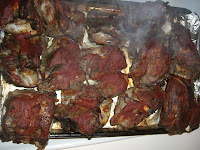
A good quality ham is clutch to any Easter feast…er. (Sorry, had to do it.) Sub-par ham with way too much fat, soaked in salt water, with a pouch of neon mystery glaze just won’t cut it. In our opinion you just can’t beat a Honey Baked Ham. However, we don’t have $90 to blow on any part of a pig (Editor’s note: those are Allie’s words. Ben could be convinced), so we went with a simple and delicious Hempler’s at a much more reasonable $30. No fancy cooking tricks here, we just baked it and served it sliced with a choice of Dijon or brown mustard for dipping.

Fresh Peas with Mint Compound Butter


We saw English peas in their pods at our local market, and had to try them. We hadn’t really seen peas in non-box or can form before, and it turns out the minimal effort of shelling fresh peas is really worth it, with a sweet grassy note that you don’t find elsewhere. Ben mixed up mint from our herb garden with softened butter in the food processor, and we used that to quickly sauté the fresh peas.

Pommes Anna


We had asked John to bring a starchy side dish, knowing he could be fully trusted not to show up with a box of instant mashed potatoes. He went above and beyond anyone’s reasonable expectations, and made pommes anna, a masterpiece of wafer thin potato slices, drenched in clarified butter, seasoned lightly with salt and pepper, and layered into a skillet. While baking, the potatoes crisp on the top and bottom layers, leaving the middle soft and delicate. When they were done, John flipped the contents out of the skillet onto the plate, revealing a lovely potato tart. Of course by the time we were done with it, it looked like it had been ravaged by wolves, but it sure was pretty while it lasted.

Homemade Crusty Bread


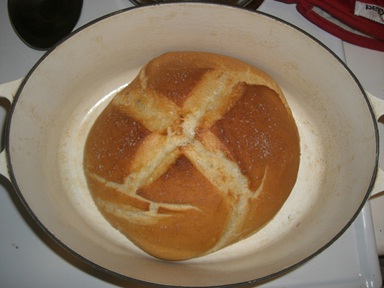
Our entire last blog post was about this exact recipe, so we won’t re-hash it in any detail here. The bread was still easy, still tasty, and still made the house smell awesome.

Strawberry Rhubarb Crumble with Strawberry Basil Ice Cream


Normally, we don’t consider desserts our strong point, so we were very happy and slightly surprised that we pulled this off. The crumble (recipe below, off of the Smitten Kitchen blog) had the classic sweet/tart combination of a strawberry rhubarb filling and a topping that was somehow soft and crunchy at the same time. The lemon zest in the topping gives it so much flavor, it was tempting to eat it alone. We topped the crumble with a homemade Strawberry Basil ice cream (which we whipped up with our ice cream attachment for the Kitchen Aid mixed), and it added a nice earthy creaminess to the tart filling. Honestly, though, any ice cream would be great.

STRAWBERRY RHUBARB CRUMBLE
Yields 6 to 8 servings.

Ingredients
For the topping:
  • 1 1/3 cup flour
  • 1 teaspoon baking powder
  • 3 tablespoons sugar
  • 3 tablespoons Demerara sugar (or turbinado sugar aka Sugar in the Raw)
    • We used granulated sugar here as well and it turned out fine
  • Zest of one lemon
  • 1/4 pound (1 stick or 4 ounces) unsalted butter, melted
For the filling:
  • 1 1/2 cups rhubarb, chopped into 1-inch pieces
  • 1 quart strawberries plus a few extras, hulled, quartered
  • Juice of one lemon
  • 1/2 cup sugar
  • 3 to 4 tablespoons cornstarch
  • Pinch of salt
Directions
  1. Heat oven to 375°F. Prepare topping: In a mixing bowl, combine flour, baking powder, sugars and lemon zest and add the melted butter. Mix until small and large clumps form. Refrigerate until needed.
  2. Prepare filling: Toss rhubarb, strawberries, lemon juice, sugar, cornstarch and a pinch of salt in a 9-inch deep-dish pie plate. (I used an oval dish this time, because they fit better in the bottom of a shopping bag.)
  3. Remove topping from refrigerator and cover fruit thickly and evenly with topping. Place pie plate on a (foil-lined, if you really want to think ahead) baking sheet, and bake until crumble topping is golden brown in places and fruit is bubbling beneath, about 40 to 50 minutes.

Friday, April 2, 2010

Pssst... Knead some Dough?

We have always found the idea of baking anything from scratch to be a daunting prospect. And making our own homemade bread? That sounded like the food equivalent of building our own house from the ground up. No freaking way. But then, we discovered a very well kept secret in the food world; baking your own crusty, warm, delicious bread is not only do-able, it’s easy! We promise!!! And you don’t need an expensive and bulky bread-making machine (which I’ve always thought makes bread that comes out slightly strange anyway). All you need is a little time, a Dutch oven and a stand mixer. If you have all of these things, you are doing yourself a serious disservice by not trying this.

Ever since were discovered the ease and deliciousness of making homemade bread, we both agree that it’s one of the greatest things since, well, sliced bread. In fact, after being initially inspired by Michael Ruhlman’s recipe in Ratio (which he admits he stole from the NYT), we’ve made a loaf every week or so. The beauty of the recipe is that it’s simple (only requires minimal hands-on work), cheap (about a buck and a half for the ingredients), adaptable (you can throw anything into the dough that you want), and it fills the house with that amazing fresh bread smell.

HOMEMADE DUTCH OVEN BOULE
Ingredients
  • 20 ounces flour
  • 12 ounces water (warm)
  • 2 t kosher salt
  • 1 t yeast (either instant or active dry, but the latter will need to be activated)
  • Olive Oil
  • Sea Salt (or more kosher salt)

Directions
  1. Weigh out the flour directly into your mixing bowl (ideally into a KitchenAid bowl).
  2. Add the salt, then gently pour the water on top, so as not to combine the flour and water too much.
  3. Sprinkle the yeast on top of the water, and allow it to activate for around 10 minutes.
  4. Once the yeast is activated (and smells nice and bread-like), use the KitchenAid dough hook and knead the dough on the lowest setting for 10-15 minutes. We’ve found that with the 20 ounces of flour, the dough tends to be too sticky and will get stuck on the dough hook, so we typically keep adding flour (slowly, about a teaspoon at a time) until the mixer kneads it consistently. You know that you’ve kneaded the dough enough when you can roll up a small ball then gently stretch it into a transparent layer without it tearing.
  5. After kneading, cover the bowl with plastic wrap and let it rest in a warm place for an hour. During that time, it will rise to about twice its original volume.
  6. After the initial rise, knead the dough for a few minutes on a floured surface, and then cover with a dish towel for a short (15 minute) secondary rise.
  7. Pre-heat the oven to 450 to ensure that it’s plenty hot when it’s time to actually cook the bread.
  8. After the secondary rise, spread some olive oil into the bottom of a Dutch oven (tee hee), then put the dough in to proof (fancy word for “sit”) for an hour.
  9. After the dough has proofed, spread on a small amount of olive oil and sea salt, then cut an ‘X’ into the top.
  10. Cover the Dutch oven with the lid and put into the oven (we’ve had the best luck putting it into the highest rack possible… otherwise the bottom can burn a little) for 30 minutes.
  11. After 30 minutes, remove the lid and return to the oven for another 10-20 minutes, or until the internal temperature of the bread reaches 200 to 210 degrees.
  12. Let the bread cool, and then enjoy it! Feel free to have fun with making savory breads (adding different fresh herbs , chopped olives, and/or roasted garlic) or with sweet breads (adding fruit and seeds or nuts).
The bread makes great sandwiches and killer toast, but our favorite is eating it warm with some olive oil and salt. Honestly, this will impress your most hard-core foodie friends, and civilians alike. But don’t let it get out how easy this is, and if you do, you never heard it from us…

Wednesday, March 24, 2010

N'Orleans Y'all (Part 2)

The eating saga continues… For more of our faves see Part 1!

Port of Call (838 Esplanade Ave, French Quarter)
Ben had been to Port of Call once before, and insisted that we visit them again so that Allie could refuel with burgery goodness after running her marathon earlier that day. We showed up that night around 5:30, and already faced a 45 minute wait. We put in our names, ordered some Monsoons (their version of a hurricane), and drank them on the street (I love this town!) until they called us in. They may have had some other options on the menu, but all of us went right to the burger section, and none of us were disappointed.

What we ate: Cheeseburger (medium rare, covered with a pile of shredded cheddar) with a baked potato (loaded). Cheap and beyond delicious, this place is well worth the wait, just make sure you hunt down the hostess with the notepad to get on the list.

Best dish: Cheeseburger. We wouldn’t waste time with anything else, except of course the loaded baked potato that comes on the side.

Domilise’s (5240 Annunciation St, Garden District)
This is another joint that Ben’s parents frequented when they went to Tulane, and one which he’s visited every time he’s been in town. It’s a tiny, hole-in-the-wall place run by a family who lives in the same building as the restaurant. They have a massive menu of Po’ Boys, and all of the ones that we had were amazing. We were particularly intrigued by the menu item which read, “Rest in peace pepper weiner.” They spelled it wrong (not us!), which is weird, because it’s spelled correctly above… it only adds to the mystery…We don’t know what a pepper weiner was, but we were all a little sad we missed it.
What we ate: Roast Beef Po’ Boy (above) , Fried Shrimp Po’Boy, Zapps Chips. The “Voodoo” flavored chips are AWESOME!

Best dish: Too hard to say. They were all so good. Had a bite of Kim’s Catfish po’boy, which was outstanding. Make sure to get any sandwich “fully dressed.”

Commander’s Palace (1403 Washington Ave, Garden District)
That night, we had an amazing experience at Commander’s. See our previous blog post, "The Waist is a Terrible Thing to Mind." We also hear that they have a pretty mean 25¢ martini lunch special. Yes, 25¢ martinis!!!

New Orleans French Quarter Historical/Dive Bar Crawl (Um…French Quarter)
On Tuesday afternoon/evening, we met up with our bartender friend Dawn, who took us to some great bars in the French Quarter. We ended up visiting an amazing mix places: everything from century-old established bars to much newer dives. Over the course of a few hours, we went to:
  • Napoleon House (500 Chartres St.)
    • Opened since 1797, it’s one of the oldest places in New Orleans. We had the Pimms cup, but later returned for a Bloody Mary.
  • Flannigan’s (625 St. Phillip)
    • A great Irish-inspired bar, complete with a fireplace and old wooden floors.
  • Alpine (620 Chartres St.)
    • Right off Jackson Square, they served up a good Bloody Mary.
  • Sneaky Pete’s (135 Chartres St.)
    • We walked by here at 6:00 am on the morning of the marathon and saw that they were packed. We decided we had to come back and have a drink there, mostly because we loved the name. The drinks were cheap, but we were a little disappointed by the bar. It didn’t have much in the way of character, however the characters at the bar ranged from sketchy to certifiably insane.
  • Old Absinthe House (240 Bourbon St.)
    • While walking to the next bar we wanted to visit, we cruised right by this place. They had fires burning, which drew us in, and we ended up downing some pricey drinks (not cool) in a building that had been around for 200 years (pretty cool).
  • Three Legged Dog (400 Burgundy St.)
    • This was one of the first bars Ben had been to in New Orleans, and remains one of our favorite off-Bourbon places. They have some good cheap pub food (highly recommended: tater tots), video poker machines, and a permanent 2-for-1 happy hour special (they put the second bottle on ice until you're ready for it). We ended our crawl here. We actually stayed for a few hours due largely to the bartenders and their awesome/hilarious service. Plus, they let us pick the movie to show in the bar… and the winner was… The Hangover (how fitting).

K-Paul’s (416 Chartres St, French Quarter)
We’d originally had reservations at John Besh’s restaurant August, but we changed our minds at the last minute after we met one of the cooks at Paul Prudhomme’s restaurant K-Paul’s the night before. We didn’t regret our decision for a second. We enjoyed more food than we could eat (or should have eaten for that matter). Although we didn't doubt the deliciousness of anything we ate, we were amused when we got home and watched Food Network’s “Best Thing I Ever Ate,” and saw that they highlighted a dish from K-Paul’s!
What we ate: Turtle Soup, Fried Green Tomatoes with warm shrimp remoulade, Shrimp Etoufee (above right), Blackened beef (above, left), Banana Foster Cheesecake, and Chocolate Hill Dessert (courtesy of the kitchen).

Best Dish: Fried Green Tomatoes. Allie lucked out by ordering this appetizer on a whim. The remoulade was warm, well-seasoned and creamy, and the tomatoes were firm and tart on the inside with a crispy crust. It would be well worth a visit to K-Paul’s for this dish alone.

Other Things We Did…
In addition to the amazing food and drink mentioned above, we thought of a few other events worth mentioning:
  • Music at Preservation Hall
    • We got here at the end of the show (which meant that we were able to sneak in for free), and caught some great music.
  • Hurricane at Pat O’Brien’s
    • Dishonorable mention to POB’s. The hurricanes that night were terrible, and the weather was too gross to go on the patio (That part isn’t POB’s fault, but the patio is the coolest part of the bar). Imagine Robitussen mixed with off brand cherry Kool-Aid, and you’ve got a pretty good idea of what we tried to choke down that night. You know it’s awful when BOTH of us abandon an $8 drink half-way through. We’re chalking this up a fluke though. Every other time we’ve been here, the hurricanes have been tasty, and the patio is a fun place to hang out, weather permitting.
  • Cooking Demonstration at the New Orleans School of Cooking
    • Our teacher was adorable (think Paula Dean meets Dr. Ruth) and the food was pretty tasty. On the menu that day were biscuits with cane syrup, jambalaya, gumbo, bread pudding and pecan pralines. Not an amazing experience, but it was a fun way to spend a morning when the weather was cruddy, plus beer was included.
  • Lafitte’s Blacksmith Shop
    • This bar was right across from our friends’ hotel and was the first bar we visited. Only then did we find that they claim to be the oldest continually occupied bar in the country! It was definitely a fun place with a chill atmosphere, and a lot of history.

Wednesday, March 17, 2010

N'Orleans Y'all (Part 1)

Although we probably consumed enough calories during our trip to Commander’s Palace to keep us full during our entire five day trip, Commander’s was just one of the many amazing places we ate and drank while in New Orleans. In fact… throughout the majority of our journey, we were faced with the classic New Orleans eating dilemma: more restaurants to visit than meals we could possibly eat. At least, that’s the dilemma we face every time we come here. We did our best, though, and will give a quick run-down of some of the not-to-be-missed spots that we visited.

Fuel Coffee House (4807 Magazine St, Uptown)
As soon as we got off the plane, we made a B-line to Fuel, which our friend Kim had found written up on a great New Orleans food blog. As soon as we got out of our cab and walked inside, we were hit with a blast of Southern hospitality and deliciousness. Upon seeing the four of us, people, without being asked, shuffled their tables around to give us (and our luggage) plenty of room to sit. We ordered a giant breakfast and tasty coffees, and couldn’t have been happier, which is saying a lot, since we just got off the red eye (which included a 3 hour layover in Dallas) half an hour earlier.

What we ate: Gumbo, Biscuits and Gravy, Praline Bacon (Bacon encrusted with pecans and a sweet brown sugar rub), Sweet Potato Pancakes (which came with about half a stick of butter… and an offer for more butter in case that wasn’t enough), and Southern Eggs Benedict (which included collard greens).

Best dish: Praline Bacon and Sweet Potato Pancakes. The pancakes were big, fluffy, and flavored with nutmeg and cinnamon, so they tasted a bit like carrot cake. That is always a good thing in our book. Instead of syrup, they were served with a warm side of a balsamic vinegar-based sauce that had blueberries bobbing about in it. Sounds a bit strange, but the tangy contrast with the richness of the rest of the dish was very pleasant. And praline bacon…enough said.

Hermes Bar (725 Rue St. Louis, French Quarter)
On the recommendation of my Mom (and based on the fact that it was half a block from our hotel), we had our first meal of the trip Hermes Bar, a recently-opened bar associated with (and next door to) the New Orleans classic restaurant Antoine’s. We got there early, were greeted by an extremely knowledgeable and old-school bartender, and ordered everything he suggested off the bar menu, which mirrors all of the classics that have been served at Antoine’s for over 160 years.

What we ate: Sazerac, Shrimp Remoulade, Oysters Two by Two by Two (Rockefeller [which they invented], Thermidor, and Bienville [which they also invented] above), Oysters a la Foche, and Soufflee Potatoes.

Best dish: Oysters Two by Two by Two . The oysters themselves were fresh and succulent. Each of the toppings complimented them perfectly, but each in its own distinct way. Decadence, sheer decadence.

Big Fisherman Seafood (3301 Magazine St, Uptown)Since we were in N.O. during crawfish season, we wanted to make sure that we didn’t miss out. Our friends John, Kim, and Marissa were staying in a hotel with a balcony overlooking Bourbon Street and were willing to host a Crawfish boil at their place. We got some takeout mudbugs (aka crawfish) from Big Fisherman (we got their recommended 5 pounds per person, but we would have been better with 2 or so), as well as some sausage, corn and potatoes. We spilled them out on some newspaper, bought some cold beers, and proceeded to suck the heads and eat the tails to our hearts contents.


Cafe Du Monde (1039 Decatur St, French Quarter)
It is our firm belief that no trip to New Orleans trip is complete without a visit to the historic Café du Monde, perhaps even two or three visits. That being said, we were both shocked that we’d been in New Orleans for more than a day without satisfying our beignet fix, but we made up for it starting on Monday morning. We met our crew there, and immediately ordered our favorite: a large Cafe au Lait (heavenly chicory coffee) and an order of three beignets… each. Sharing beignets can get ugly, we’ve learned that the hard way. It was just as good as every other time we’ve been, and a breakfast that we repeated the next morning.
What we ate: Large hot Cafe au Lait and Beignets.

The fun isn’t over yet! Stay tuned for the thrilling continuation of our mission to give ourselves heart attacks in a mere five days.

Saturday, March 6, 2010

A Waist is a Terrible Thing to Mind (The Commander's Palace Story)

We just got back from a trip to New Orleans, which is one of our favorite cities. We'll have a few posts covering the entire trip, but because this is primarily a food blog, we thought that we'd start with our most incredible culinary experience of the trip. In a city known for its food, the bar was set pretty high and we had a lot of amazing foodie experiences. The chef's tasting menu at Commander's Palace, however, handily beat anything else we ate in the city. We'd picked Commander's for our fancy "spendy" dinner not only because it is one of the oldest and most established fine dining restaurants in New Orleans, but also is where amazing chefs in the area jump start their careers. Among those chefs: Emeril Lagasse, Paul Prudhomme, and John Besh. Even with our sky high expectations, Commander's Palace did not let us down.

With a group of friends who had come to N.O. with us, we headed to our 7:00 reservation an hour early because we wanted to grab a pre-dinner cocktail at the bar. Our trip to the bar began with a trek through the kitchen (which was pretty amazing), and included sightings of James Carville (aka the Rajin' Cajun) and the owner of Commander's Palace, . The service at the bar was attentive and friendly (particularly to Allie) and the cocktails were good (but not great), but Commander's didn't get famous for their drinks.

After we were seated, it only took minor cajoling to get everybody to agree to the $100 "Chef's Playground" (which required a unanimous decision at the table) and four of us (including both of us, of course) also opted for the $68 wine paring, which was worth every penny. Without further ado, here it is, in all of its glory:

Truffled Egg & Caviar
Shaved black Oregon truffles, Atchafalaya Basin bowfin roe and sassafras chantilly
(1996 Duval-Leroy Brut Champagne)

Tortellini en Brado
A rich mushroom consommé with black trumpet mushrooms and herbed goat cheese tortellini
(1997 Kalin Cellars Potter Valley Reserve Sauvignon Blanc, Mendocino)

Foie Gras "Du Monde"
Cast iron seared foie gras over roasted pecan and foie gras beignets with a foie gras cafe au lait warm sugarcane syrup & chicory coffee "mist"
(2003 Royal Tokaji Red Label Aszu Five Puttonyos, Hungary)

~Le Coup De Milieu~
Maker's Mark, Grand Marnier, Cherry Herring, lime juice, and Peychauds bitters

Louisiana Crawfish "2" Ways
Crispy soft shell crawfish and a sauté of crawfish tails with grilled corn, tomatoes, Creole crawfish bisque and toasted garlic popcorn rice
(2007 LIOCO Chardonnay Sonoma County, California)

Cracklin' Crusted Duck
An air dried Muscovy duck breast with potato Boulanger, caramelized Louisiana citrus and roasted pecan duck fond
(2007 Domaine Jean-Jaques Girard en Charlemagne, Corton Grand Cru)

Artisan Cheese Plate
Bocage honeycomb, kumquat marmalade, shaved apples, and warm pecan biscotti
(2004 Dme. Stephane Pichat le Champon Cote Rotie, Rhone Valley)

The Angry Ice Cream Cone
Vanilla-toasted black pepper ice cream in a dark chocolate cone over a confiture of pink peppercorn and golden pineapple with Sailor Jerry's rum caramel
(2007 Chateau Gravas Sauternes, Bordeaux, France)

A few notes about the experience:
  • The service was great. Super-attentive without being stuffy. A perfect level of New Orleans friendliness. Every course and wine paring described to us as it was served.
  • Our favorite course was the Foie, which was creamy, sweet, savory, and salty. A well-balanced and beautiful course all around, paired with a wine that cut right through the richness of both the foie and the beignet.
  • Our favorite wine was probably the Sauvignon Blanc that came with the tortellini... perhaps the richest and most complex white wine we've ever had.
  • We were a little trepedatious about the angry ice cream cone, but sweet vanilla flavor really set the tone, and was followed by a slightly spicy peppery finish, which were both set off by the sweetness of the pineapple and caramel.
  • And of course, like true food geeks we got our menus signed. Potentially by a future New Orleans celebrity chef.

Wednesday, February 24, 2010

Demi'd if you do, Demi'd if you don't

Based on Ben’s recent desire to become a sauce man (there’s just enough innuendo there to give me pause, but not enough to prevent me from throwing it out there as a potential title…), we asked for James Peterson’s Sauces for Christmas. On Amazon, the two inch thumbnail image gave us the impression that it would be a quick read (note to self: despite the lack of a disclaimer, the images on Amazon are NOT actual size…). Much to our surprise, on Christmas morning, we were greeted by a 600 page tome under the tree. Now, that’s a LOT of sauces!

When we started digging through the book, we noticed one commonality: they all start with a generous dose of veal demi-glace. Not just a splash that we could replace with beef stock, mind you. In most cases, the majority of the sauce (volumetrically) was meant to be comprised of this rich, thick, silky nectar of the gods. So, rather than abandon all ‘sauce man’ dreams, we made a fateful decisions: we’d make our own natural demi*.

After doing a great deal of research (since that’s Allie’s job, and Ben’s just a huge dork), we ended up putting together a recipe (which follows) that was a combination of what Michael Ruhlman describes in Ratio (which is Ben’s new favorite book), Thomas Keller describes in The French Laundry Cookbook, and an instructional video that we found on this website. And, sure enough, after many hours of reduction and re-reduction, we ended up with a few pounds of beautiful, beautiful demi. It definitely involved a time (~20 hours total cook time) and financial (~50 bucks) investment, but in the end, our freezer now contains 27 little blocks of deliciousness…

*The ‘classic’ demi is made by reducing a combination of veal stock and sauce espagnole (which itself is a mixture of veal stock and a dark roux). A ‘natural’ demi leaves out the roux (which thickens the sauce in less time and increases yield because you don’t need to reduce your veal stock as far). For our first demi, we figured we’d go au natural… maybe next time we’ll try it with roux and see if we can tell the difference.

NATURAL VEAL DEMI GLACE
Ingredients

  • 12 lbs veal bones (if frozen, thaw them)
  • 1 can tomato paste
  • Olive Oil
  • 3 carrots
  • 3 stalks celery
  • 2 leeks
  • 2 Spanish onions
  • 1 head garlic
  • 1 T peppercorns
  • 3 sprigs thyme
  • 4 bay leaves
  • Little Red wine (for deglazing)

Directions

  1. Preheat oven to 450.
  2. Oil the bottom of a baking sheet and arrange bones on it in a single layer (preferably with enough room for them to roast rather than steam).
  3. Roast bones for 45 minutes.
  4. While bones are roasting, prepare veggies by roughly chopping them into 1-2 inch chunks (don’t worry about removing skin/peels).
  5. Pull out bones, flip them over, and brush with the tomato paste.
  6. Roast for another 15 minutes.
  7. Pull bones from oven, put into stock pot(s), and add ~3 cups of water for every pound of bones (should be enough to cover bones by a few inches).
  8. Pour fat off roasting pan, and put back into the oven for a few minutes until the fond caramelizes a little more, then deglaze with red wine and add to stock.
  9. Put stock pots onto medium high heat until they come to a simmer, skimming off gunk from time to time with a small strainer.
  10. Once simmering, add veggies and spices, then ensure that the heat stays between 190 to 200 degrees for the next 8 hours or so, or until the liquid is reduced to half. You now have a veal stock!
  11. Using a china cap or colander, strain away all of the solids, then remove the fat from the resulting liquid (one trick here is to allow the stock to come to come to room temperature, then refrigerate it. After it cools, it should be pretty gelatinous, and you can scrape the layer of fat off the top).
  12. After you’ve removed the fat, put the stock back onto the stove, and reduce it by half again. You now have a natural demi!
  13. Pour the demi through a fine mesh strainer and into a baking pan, allowing it to cool then refrigerating.
  14. Cut the gelatinous demi into blocks, then wrap and refrigerate them.
  15. From what we hear, they can last several months in the freezer.